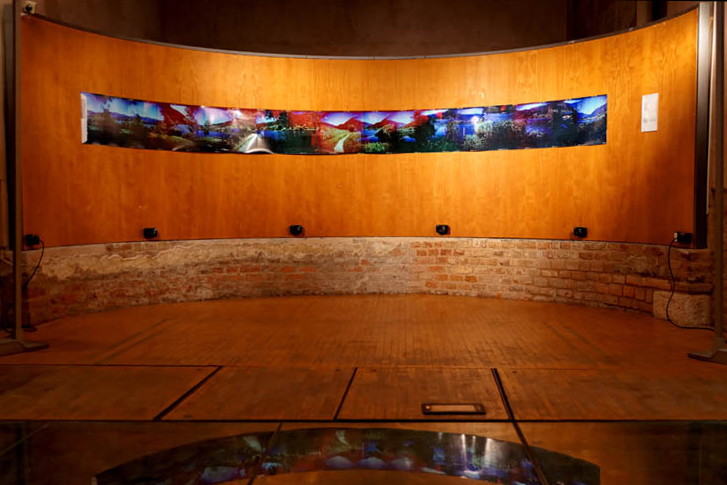
Every problem, every anguish
has vanished from my breast
and I play, full of joy
far away from the world.
For a Zen adept
there are no limits
the blue sky ought to be ashamed
of being so small.
Muso Soseki, 1276 –
1351, Buddhist monk, Japanese poet
The tradition of a continuous, unfolding strip of images and words originated in India and reached Japan—by way of China—between the sixth and seventh centuries AD. In Japan, the *emakimono* (often referred to simply as *emaki*) is a horizontal, illustrated narrative work that combines text and imagery, executed—whether drawn, painted, or printed—on scrolls of paper or silk that can reach up to 20 meters in length. These scrolls depict a wide array of subjects, including landscapes, romances, battles, religious concepts, folktales, and supernatural narratives. The scroll format is intrinsically linked to Zen philosophy: the scenes "unroll" before the viewer’s eyes, allowing them to roam freely—unconstrained by conventional structures—through both real and imaginary realms, near or far, within a landscape that mirrors their own state of mind.